How Global Supply Chains Work

In today’s interconnected economy, products used by consumers often travel thousands of kilometers before reaching the final customer. Raw materials may originate in one country, manufacturing may occur in another, and final distribution may take place across multiple markets.

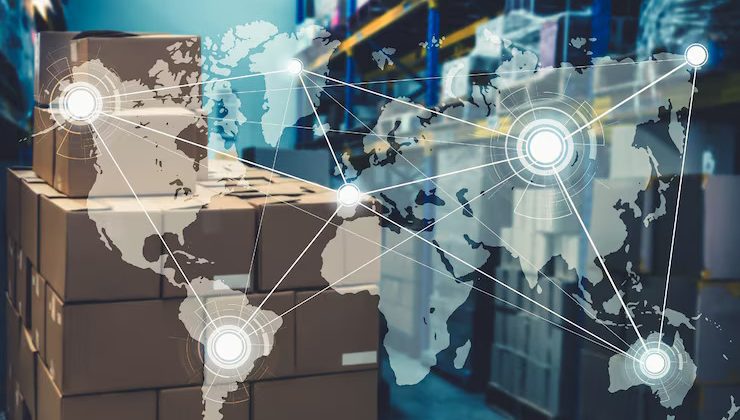
This complex system of producing, transporting, storing, and delivering goods is known as the global supply chain. It connects manufacturers, suppliers, logistics providers, and retailers across the world to ensure that products reach the right place at the right time.

Understanding how global supply chains work is essential for businesses, policymakers, and professionals working in logistics and international trade.

What Is a Supply Chain?

A supply chain refers to the entire network involved in producing and delivering a product from raw material sourcing to the final consumer.

It includes all activities such as:

  • Procurement of raw materials
  • Manufacturing and production
  • Transportation and logistics
  • Warehousing and distribution
  • Retail and final delivery

Each stage of the supply chain involves different organizations working together to move goods efficiently and cost-effectively.

When these activities span multiple countries, the system becomes a global supply chain.

Key Components of Global Supply Chains

Global supply chains involve several interconnected stages that ensure the smooth movement of goods across international markets.

Raw Material Sourcing

The supply chain begins with the sourcing of raw materials required for production. These materials may come from different parts of the world depending on availability and cost.

For example:

  • Electronics manufacturers may source rare minerals from Africa
  • Textile companies may import cotton from major agricultural regions
  • Automotive companies may procure components from multiple countries

Efficient sourcing strategies help companies maintain competitive production costs.

Manufacturing and Production

Once raw materials are procured, they are transported to manufacturing facilities where products are produced or assembled.

Global companies often distribute manufacturing operations across multiple countries to take advantage of:

  • cost efficiencies
  • specialized skills
  • favorable trade policies
  • proximity to major markets

For example, many consumer electronics products are designed in one country, manufactured in another, and distributed globally.

Transportation and Logistics

Transportation plays a critical role in connecting different stages of the supply chain.

Goods may move through multiple transport modes such as:

  • ocean shipping
  • air cargo
  • rail transport
  • road transportation

Container shipping is one of the most important elements of global logistics because it enables standardized and efficient movement of goods across international trade routes.

Logistics providers coordinate shipments through ports, airports, and inland transportation networks.

Warehousing and Inventory Management

Warehouses serve as key nodes in supply chains by storing goods before they are distributed to markets.

Modern supply chains rely on strategically located warehouses to:

  • reduce delivery time
  • maintain inventory availability
  • support regional distribution

Warehouse operations include inventory tracking, order processing, and packaging.

Advanced warehouse management systems help organizations maintain efficiency and visibility in inventory operations.

Distribution and Retail

The final stage of the supply chain involves delivering goods to retailers, distributors, or end customers.

Distribution networks may include:

  • regional distribution centers
  • wholesale distribution channels
  • retail outlets
  • direct delivery to consumers

The growth of e-commerce has further transformed distribution systems, increasing demand for efficient logistics and last-mile delivery solutions.

Role of Logistics in Global Supply Chains

Logistics acts as the backbone of global supply chains. Without efficient logistics systems, goods cannot move smoothly across international markets.

Logistics professionals coordinate various activities such as:

  • shipment planning
  • freight forwarding
  • customs clearance
  • transportation management
  • warehouse coordination

They ensure that goods move efficiently across supply chain networks while meeting regulatory requirements and delivery timelines.

Importance of Supply Chain Coordination

Global supply chains involve multiple stakeholders including manufacturers, suppliers, transport operators, customs authorities, and distributors.

Effective coordination between these stakeholders is essential to ensure:

  • timely delivery of goods
  • cost efficiency
  • supply chain reliability
  • regulatory compliance

Supply chain managers use digital platforms, data analytics, and communication systems to maintain visibility and coordination across supply chain operations.

Challenges in Global Supply Chains

Despite their efficiency, global supply chains face several challenges that require careful management.

Some common challenges include:

Supply Chain Disruptions

Natural disasters, geopolitical tensions, and global crises can disrupt supply chains and delay shipments.

Transportation Bottlenecks

Congestion at ports, limited transportation capacity, and infrastructure constraints can affect logistics operations.

Regulatory Complexity

International trade involves customs procedures, documentation requirements, and regulatory compliance across multiple countries.

Demand Uncertainty

Changes in market demand can affect production planning and inventory management.

Supply chain professionals play a critical role in managing these challenges and ensuring supply chain resilience.

Technology Transforming Global Supply Chains

Technological advancements are transforming how supply chains operate.

Key technologies include:

  • digital supply chain platforms
  • artificial intelligence for demand forecasting
  • Internet of Things for shipment tracking
  • automation in warehouses
  • blockchain for trade documentation

These technologies improve supply chain visibility, efficiency, and decision-making.

Why Global Supply Chains Need Skilled Professionals

As supply chains become more complex and technology-driven, organizations require skilled professionals who understand logistics operations, global trade, and supply chain management.

Professionals working in this field must be able to:

  • analyze supply chain data
  • coordinate international logistics operations
  • manage transportation and warehousing systems
  • ensure compliance with international trade regulations

The growing importance of supply chains in global commerce is creating increasing demand for professionals with specialized logistics knowledge and operational expertise.

The Future of Global Supply Chains

Global supply chains will continue evolving as businesses adopt new technologies, diversify sourcing strategies, and build more resilient logistics networks.

Key future developments include:

  • greater supply chain digitalization
  • increased automation in logistics operations
  • expansion of multimodal transport networks
  • sustainable logistics practices

These changes will create new opportunities for professionals who understand the dynamics of global supply chains.

Conclusion

Global supply chains form the foundation of modern commerce by connecting producers, suppliers, logistics providers, and consumers across international markets.

Through coordinated activities such as sourcing, manufacturing, transportation, warehousing, and distribution, supply chains ensure that goods move efficiently around the world.

As global trade continues to expand and supply chains become increasingly complex, the role of logistics and supply chain professionals will become even more critical in ensuring the efficiency and resilience of global commerce.

Interested in building a professional career in global logistics and supply chains?

Explore the Chartered Logistician® pathway designed to prepare professionals for careers in global logistics and supply chain management.

Chartered Logistician®

Chartered Logistician® is a structured professional pathway designed to develop global logistics and supply chain leaders through progressive learning, real-world experience, and internationally aligned credentials, governed by the International Chartered Logistician Foundation.

Contact Us

Head Office

© 2026 Chartered Logistician® | All rights reserved.